Showing posts with label fairies. Show all posts

Tuesday, September 17, 2019

THE REAL HEADLESS HORSEMAN - by Dani Harper

Posted by: Dani Harper, Author
by Dani Harper

It’s mid-September and I know I’m not the only one who’s already decorating for Halloween!  Recently I was admiring an inflatable Headless Horseman in someone’s yard and began thinking about the legend behind it.  Most of us recognize this apparition from Washington Irving’s “The Legend of Sleepy Hollow”, which was first published as a short story in 1820.

In Irving’s tale, a ghostly rider without a head appears one night and pursues superstitious schoolteacher Ichabod Crane. The wild chase ends with Ichabod disappearing from the village, never to be seen again.

But the story of the headless horseman didn’t originate in Sleepy Hollow! And it’s not alone…


These dark faery beings have been known since Celtic times in Ireland and Scotland. Referred to as “The Dullahan” or Gan Ceann, meaning "headless”, they are clothed in black, and may be male or female. Each one carries its own glowing head under its arm – but the head is very much alive with a wide and wicked grin. The Dullahan’s dark eyes are said to cast back and forth continually searching for prey. Often the head is held aloft in one hand to gain a better view, and legend says it can see for many miles! The head can also speak, but only a single word: the name of its next victim.

The Dullahan’s mount is usually a wild black stallion with red eyes. The horse strikes sparks with its hooves as it gallops, and flame spurts from its nostrils. No reins are needed as horse and rider are one in purpose. And while the Dullahan carries its head in one hand, the other hand wields a long whip made of a human spine! 

In some stories this faery creature may drive a dark carriage – the Cóiste Bodhar, or Silent Coach - pulled by black horses. In Scotland, this vehicle is sometimes known as Hell’s wain (wain means cart or wagon), and is able to fly through the night sky! It is said that once the Silent Coach has entered the mortal realm, it cannot return without a soul.


Whatever way the Dullahan may choose to travel, its victims are not random. Like the Black Dogs or Grims of the British Isles, the Dullahan is a herald of death. When it rides out, its mission is to summon the soul of someone already destined to die. It may stop in front of the house where the person lives or it may appear at the site of their impending demise.

People who catch sight of a Dullahan will often clap their hands over their ears so they cannot hear their name being called. Locks and bars cannot stop it – the faery and its mount can sail through any gate as if it wasn’t there. There is only one possible defense:  to throw a piece of gold. Even the tiniest item made of gold is sufficient to send the horseman away. In one story, a traveler drops a gold-headed pin from his clothing and the creature disappears. Curiously, the Dullahan doesn’t take the gold – perhaps it is repelled by it. 

Although the Dullahan may be encountered any time of the year, some seasons are more dangerous than others. In late August and early September, for instance, folklore advises staying home! Keeping the curtains closed at night is important – not only does it block the Dullahan from peering inside with its disembodied head, but this prevents you from accidentally witnessing the creature. Apparently, the horseman doesn’t like to be watched as it works, even if it’s not after you. This dark faery has been known to blind onlookers in one eye with its bony whip! 


According to the Celts, the most dangerous time of the year is Samhain, which falls on November 1st and signifies the beginning of winter. The veil between all the worlds is thinnest at this time. Ghosts and faeries and all manner of supernatural creatures can walk freely – and so can the REAL Headless Horseman!

If you’re planning to stay out late on Halloween night, it wouldn't hurt to carry a token made of gold ... just in case.

Monday, August 26, 2019

HERE BE NEWS for August 26, 2019

Posted by: Dani Harper, Author


~~~~~~~~~~~~~~~~~~~~~~~~~~


Monday, August 19 - 
"HERE BE NEWS" - All the latest from the gang at Here Be Magic, including a new release.

Wednesday, August 21 -
“NEW IN WEREWOLVES AND GASLIGHT MYSTERIES!” - Another gripping novel by award-winning author Shawna Reppert. Read an excerpt of MOON OVER LONDON and find out more.

Thursday, August 22 -
“TROPES - Yay, Nay, or So-So?” – What do you think are today’s popular romance tropes? Author Linda Mooney asks which ones YOU like, and which ones you'd like to see less of. 

Saturday, August 24 -
This week's Bring It Back(list) feature is “THE GRIM SERIES”, a fae and fantasy romance by Dani Harper. HURRY - the Kindle versions are just 99 cents this month! Scroll below for all the details.


MOON OVER LONDON
Book 2 of Werewolves and Gaslight
by Shawna Reppert

Werewolves are disappearing from the gaslit streets of London. Are they being  murdered? Kidnapped?

Few beyond the ’wolves’ own families notice they’re missing, and fewer still care. With the aid of a clandestine toff werewolf and a lady alchemist with attitude, Inspector Royston Jones is determined to protect all those who dwell in his city. But his superiors are indifferent, the werewolf community suspicious, and he has too few leads and too many suspects—including his estranged uncle. Only one thing is certain; unless he can solve the mystery, more ’wolves will be taken every time the full moon rises.


Another gripping novel by the award-winning author of A Hunt by Moonlight!


THE GRIM SERIES
by Dani Harper
  1. Storm Warrior
  2. Storm Bound
  3. Storm Warned
  4. Storm Crossed

The fae are cunning, powerful and often cruel.

The most beautiful among them are often the most deadly. Hidden far beneath the mortal world, the timeless faery realm plays by its own rules—and those rules can change on a whim. Now and again, the unpredictable residents of that mystical land cross the supernatural threshold…

In this enchanting romance series from Dani Harper, the ancient fae come face-to-face with modern-day humans and discover something far more potent than their strongest magic: love.

KINDLE EBOOK SALE:
Just 99¢ each, but HURRY!
Sale ends soon!
https://www.amazon.com/gp/product/B074BRZ9NK


PS - WHAT’S A GRIM? 
And what inspired Dani Harper to write The Grim Series?
Find out on Here Be Magic:
~~~~~~~~~~~~~~~~~~~~~~~~~~~~~~~~~~~

Saturday, April 27, 2019

It was a Dark and Stormy Night... a Bring It Back(list) feature by Dani Harper

Posted by: Dani Harper, Author
An excerpt from
STORM WARNED, 
Book 3 of the Grim Series:

The sound of shattering glass woke him, and for a moment Liam didn’t know where he was. Another crash from somewhere above cleared some of the sleep from his brain, but the roaring in his ears continued. Wind, he realized suddenly. A hellacious storm was shaking the entire house to its century-old foundations. He’d fallen asleep in front of the damn TV again, but it was off and so were the lights. Power must be—

Twin bolts of lightning struck close by, and instinct had him diving for the floor behind the couch just as something exploded in the yard. Before he could take another breath, thunder battered his senses until he was forced to clamp his hands over his ears. The floor beneath him vibrated and shards of glass and wood rained down around him. And something huge, dark and heavy came crashing down beside him like a damn refrigerator, narrowly missing him.

This is Book 3 but 
every story in the series
can stand alone.
When the tumult finally died away, lightning continued to flare and flicker, enabling him to see part of a tree impaling the living room wall, stripped of all branches like a giant’s spear—and right where Brewster the Mooster had always hung. Uncle Conell’s ancient trophy had been named by a three-year-old Liam, and was practically part of the family. Now the searing flashes of light revealed the enormous stuffed head upside down mere inches from to Liam’s hiding place. Its monstrous antlers had been driven into the floorboards, and one glass eye hung free like something out of a horror movie.

Every window in the room had shattered, and the force of the wind drove the rain sideways through the opening, the furious drops soaking everything.

Cautiously, Liam rose and felt his way to the kitchen where a collection of candles, flashlights, and battery-filled lanterns collected dust on top of the fridge. He grabbed a lantern, and tucked a small penlight in his pocket, but with the near-continuous flashes from the storm, he quickly realized there was little point in turning either light on. No point going upstairs either—the sound alone was enough to tell him that the windows were gone up there as well, and he couldn’t do anything more about that than about the broken glass that blanketed the living room. 

Suddenly the house shook hard enough that pictures fell from walls in every room, as if to underscore that this was no ordinary thunderstorm. Tornadoes were rare here but not unheard of, and Liam decided to err on the side of caution, taking shelter in the bottom of a solidly-built hallway closet. 

Whose bright idea was it to put the door to the damn cellar on the outside of the house?

Image: Bigstock.com
From the back cover:

When Caris’s unearthly musical talent attracts the attention of the Wild Hunt, the Welsh farm girl is stolen away to serve as a faery grim, a herald of death. Two centuries later, she’s finally escaped back to the human world—and into the present-day life of a reclusive and heartbroken American musician.

Music was Liam’s whole life—until a crushing betrayal left him desperate to flee the public eye. Yet long-dormant passions awaken within him after a powerful storm strands a beautiful, strong-willed woman on his isolated farm. When a Fae prince bent on ruling both human and faery realms threatens Caris’s life, Liam must decide if he can finally believe in love again, not just for her sake—but for the sake of two worlds.

* * * * *

LEGEND ∙ LORE ∙ LOVE ∙ MAGIC


The fae are cunning, powerful and often cruel. The most beautiful among them are often the most deadly. Hidden far beneath the mortal world, the timeless faery realm plays by its own rules—and those rules can change on a whim.

Now and again, the unpredictable residents of that mystical land cross the supernatural threshold…

In this enchanting romance series from Dani Harper, the ancient fae come face-to-face with modern-day humans and discover something far more potent than their strongest magic: love.

Available in paperback, Kindle ebook and Audiobook
You can check out and purchase ANY of Dani’s books on her Amazon Author Page: 

Saturday, April 13, 2019

What to Do with a Naked Man in Your Front Yard - STORM WARRIOR by Dani Harper

Posted by: Dani Harper, Author
Bring it Back(List) Feature for April 13, 2019


STORM WARRIOR
by Dani Harper

Book 1 of the Grim Series
Kindle versions in the series currently on sale for 99¢

Two thousand years ago, Rhys was the fierce Celtic warrior branded by the Romans as “the Bringer of Death.” Mortally wounded in battle, he was captured by the Fair Ones, cunning and powerful masters of the Welsh faery realm. They spared his life…but for a price. As a grim, he has roamed the earth as a messenger of death—until a single act of kindness breaks the ancient enchantment and delivers him into a strange new world…


As a child, Morgan Edwards marveled at the faery tales spun by her beloved grandmother, stories of the magical beings hidden in the heart of ancient Wales. But now Morgan is all grown up, a veterinarian who believes only in what science can prove—until the night a massive black dog saves her from a vicious attack, and life as she knows it changes forever. Suddenly a stranger stands before her, the man of her dreams made flesh and blood not by science, but by a magic that could bring them their hearts’ desires ... or cost them everything they have.


EXCERPT from STORM WARRIOR by Dani Harper


Morgan pressed the sharp tip of the garden hoe against the throat of the man lying in the grass. “Okay Reese, what the hell are you doing here on my front lawn? You’ve got no car, no keys and no clothes. How’d you get here?”

“My name is Rhys.” He corrected, pronouncing it with a single roll of the r, just as Nainie had said her r’s all her life. As did every Welsh person Morgan had met on her trip, from the hotel clerks to the shopkeepers to the tour directors. “And it was you brought me here.”

“I’m pretty sure I’d remember that. Now, where did you come from?”

“I was a warrior of my clan until I was captured by the Roman invaders. They forced me to fight in the arena at Isca Silurum and named me The Bringer of Death for my skills. I thought I knew hell then, but I had not truly found it until I escaped from them.”

Good grief, was he high on something? The Bringer of Death… Somebody had been playing way too many video games. “Good for you. Ten points for originality. Let me guess, you were drinking last night, and your friends decided to play a prank on you. They stole your clothes and dumped you at the wrong place. Am I close?”

“A prank.” He seemed to consider that. “Yes, you could say that a bit of a prank was played on me. I found a cave, but it turned out to be an entrance to the world below. The Tylwyth Teg found me there, and there aren’t greater pranksters to be had.”

She nearly dropped the hoe. “How do you know about the Tylwyth Teg?” Except for her grandmother, she’d never heard anyone on this side of the ocean speak of them, never mind pronounce their name correctly. The tourist shops in Wales did a booming business in faery merchandise, yet she hadn’t heard the real name of the fantasy creatures used very much even in that country. She narrowed her eyes at the man, daring him to answer.

He shrugged a little. Although she wasn’t pressing on his neck anymore, he remained prone. “The Fair Ones are cousin to men but very much older. Ancient as the mountains. It was the custom of our clan to leave offerings for them, outside the village. The Fair Ones are often bored, and they think nothing of toying with mortals for sport.”

Nainie Jones had often spoken of her childhood, told of her mother leaving milk and bread on the back step for the Tylwyth Teg. It was an offering, a gift of hospitality, she said, so they wouldn’t play tricks on the family. Morgan gripped the hoe harder to keep her hands from trembling, yet she couldn’t help but be fascinated.

“You cannot enter their territory without permission or payment,” he continued. “I had nothing to offer when they discovered me. Not even my life, as I was dying. I thought they would finish me, but instead they healed me. And that was their prank. Because then they changed me, so they could take their payment in servitude.”

Rhys—if that was even his real name—either believed what he was saying or he was a prime candidate for an Oscar. Because try as Morgan might, she couldn’t see any evidence that he was lying. He had to be crazy then, but everything about the whole situation was insane. After all, she was standing in her front yard in her pajamas, holding a naked man at the point of a garden hoe. She’d taken assertive action when she’d seen him lying in the grass, assuming he was drunk or something. Well, she’d gotten the upper hand all right.

Now what was she supposed to do with the guy?

* * * * *


LEGEND ∙ LORE ∙ LOVE ∙ MAGIC


The fae are cunning, powerful and often cruel. The most beautiful among them are often the most deadly. Hidden far beneath the mortal world, the timeless faery realm plays by its own rules—and those rules can change on a whim.

Now and again, the unpredictable residents of that mystical land cross the supernatural threshold…

In this enchanting romance series from Dani Harper, the ancient fae come face-to-face with modern-day humans and discover something far more potent than their strongest magic: love.


Available in paperback, Kindle ebook and Audiobook
Kindle versions currently on sale for 99¢

Tuesday, May 15, 2018

Are Frogs and Toads Lucky? Legends and Lore

Posted by: Dani Harper, Author
Image: Bigstock.com
Late last night the "spring peepers" gave a concert in my yard. Toads trilled under the porch, as enthusiastic bass and tenor sections of frogs in the garden competed with a shrill soprano chorus of tiny tree frogs amid the lilac branches. 

The sound of these creatures is the surest sign that the warm weather is here to stay. In fact, frogs and toads are also called spring cheepers, and even pinklewinks and pinkwinks, depending where you are in North America.

I’ve been fascinated with amphibians ever since I was a kid scooping up tadpoles into a jar from the creek near my house. When I grew up and left home, my Welsh grandmother gave me a ceramic frog for my apartment and told me that I should always have a frog in the house for good luck. That was a long time ago, but I still keep a statue of a frog near the door, and there are always a few frog and toad figurines in my home.

Just in case...

The ancient Romans thought house frogs were lucky too, keeping live frogs as mascots. Both the Egyptians and Greeks believed that frogs possessed a creative force – they were symbols of inspiration (Hmmm … as a writer, maybe I need some frogs on my desk!)

Chan Chu, the Toad of Wealth
Image: Bigstock.com
FROGS AND WEALTH

Many cultures consider it a sign that money is coming to you if a frog enters the house. Figurines of frogs are used in the practice of Feng Shui in order to attract wealth both at home and at work. 


A three-legged toad named Chan Chu is the traditional pet of the immortal Liu Hai, Chinese god of wealth. The toad is usually pictured with a gold coin in its mouth, and often sitting on a pile of coins as well. 

Businesses often keep a statue of Chan Chu near their cash register. In the home, however, Chan Chu is never placed facing the door. The toad is to be placed as if he has just entered the home, bringing abundance with him.

FROGS AND ACHIEVEMENT

Many societies have equated frogs and toads with great transformative powers and even reincarnation. After all, they're every bit as amazing as butterflies. They go through vastly different phases in their lives:  From eggs they hatch into gilled tadpoles that can only live underwater, and then gradually transform to air-breathing land creatures. It’s not surprising that frogs are also associated with personal growth and achievement.

Image: Bigstock.com
The ultimate achievement is shown in an old story: A toad had fallen in love with the moon and wanted to go there more than anything. Everyone told the toad that it was impossible to leap so high. But the toad decided not to listen and began jumping. Each time it jumped, it went a little bit higher. After many, many jumps, it finally reached the moon!

Speaking of the moon, it’s interesting to note that while western cultures perceive the shape of “man in the moon”, the Chinese might point to the “toad in the moon” instead. And in some Asian tales, eclipses occur when the toad tries to swallow the moon itself.


FROGS AND FERTILITY


Frogs and toads are ideal symbols 

of transformation and change!
Image: Bigstock.com
Since frogs lay enormous quantities of eggs, it’s only natural that they would become a fertility symbol. The Egyptians depicted the water goddess, Heket, as a frog or as a woman with the head of a frog. She ruled conception and birth, was the goddess of midwifery and protected new-born babies. 

Egyptian women seeking to conceive or those in the midst of childbirth often wore amulets which depicted Heket as a frog sitting on a lotus flower. It’s interesting that in ancient Mesoamerica, some tribes worshipped a corn goddess who took the form of a frog or a toad. Just like Heket, she was the patron of fertility and childbirth.

Frogs also came to symbolize abundance in general. They appeared in vast numbers during the annual flooding of the Nile and it wasn’t long before the Egyptians adopted the frog as their official hieroglyph for an immense number: 100,000!

FROGS AS MEDICINE 
Vodka or whiskey with frogs in it is
considered good for you in Vietnam.

Image: Bigstock.com

Many cultures associated frogs and toads with healing powers. A supposed cure for thrush, sore throat, and colds was holding a live frog and placing its head in the patient's mouth! As the frog breathed, it was said to draw the illness away from the patient and into itself. Maybe this is why laryngitis is still sometimes described as "having a frog in your throat". You could also drink the water that a frog had been swimming in. 

Although it was often believed that frogs and toads caused warts, it's also been claimed that warts could be cured by rubbing a frog or toad across them. Eating frog soup was said to cure whooping cough.

The ancient Celts venerated natural bodies of water, and springs and wells were sacred. The presence of frogs in the water was highly desirable since they associated frogs with both purity and healing. Bathing in such water or drinking it was thought to cure illness. Many such wells still exist, and one in Shropshire, England, is allegedly guarded by three frogs who are actually faeries in disguise!

Incidentally, there’s an old story about how frogs came to have only four toes on their front feet while their back feet have five. A group of young frogs ignored the advice of their elders and hopped into the midst of what they thought was going to be a sumptuous feast of bright fireflies. Instead, they found themselves in the midst of the faery court. The faery queen was so outraged by this interruption that she used her magic to remove a toe from every front foot of every frog – and threatened to remove more if they ever came back!


Frog brought fire to Man by carrying a burning stick.
Image: Bigstock.com
FROGS AS HEROES

Frogs and toads have appeared in ancient stories as heroes and benefactors of the human race. In Native American legends of the Southwest, Frog is usually depicted carrying a piece of wood in its mouth, because the Mojave people believe it was the Frog who brought fire to humans. 


In some stories, Australia’s Aboriginal peoples credited the frog with bringing rain to make the plants grow. And in Aztec folklore, the god Quetzacoatl assumed the form of a little blue frog in order to bring “the food of the gods” to humans – cocoa!

Good frog!


>>>>>>>>>>>>>>>>>>>><<<<<<<<<<<<<<<<<<<<<<

LEGEND ∙ LORE ∙ LOVE ∙ MAGIC

The fae are cunning, powerful and often cruel. The most beautiful among them are often the most deadly. Hidden far beneath the mortal world, the timeless faery realm plays by its own rules—and those rules can change on a whim.

Now and again, the unpredictable residents of that mystical land cross the supernatural threshold…

In this enchanting romance series from Dani Harper, the ancient fae come face-to-face with modern-day humans and discover something far more potent than their strongest magic: love.


STORM WARRIOR, STORM BOUND, STORM WARNED, STORM CROSSED
Note: Every book in this series is designed to stand alone.
It's fun to read them in order, but you won't get lost if you don't!


See ALL Dani's novels on her Amazon Author Page 

Thursday, June 15, 2017

GO BIG OR GO GNOME

Posted by: Dani Harper, Author

Image from Bigstock.com
Hi, my name is Dani, and I collect gnomes. Which might be somewhat normal except I didn't intend to collect gnomes! I didn't plan to have any gnomes ever. Gnomes were not part of my overall landscape design or my home decor plans. And then my mother gave me a gnome. You know the one, the little guy that promises you'll never have to roam alone? She’d never heard of Travelocity, she just saw him and thought he was cute.

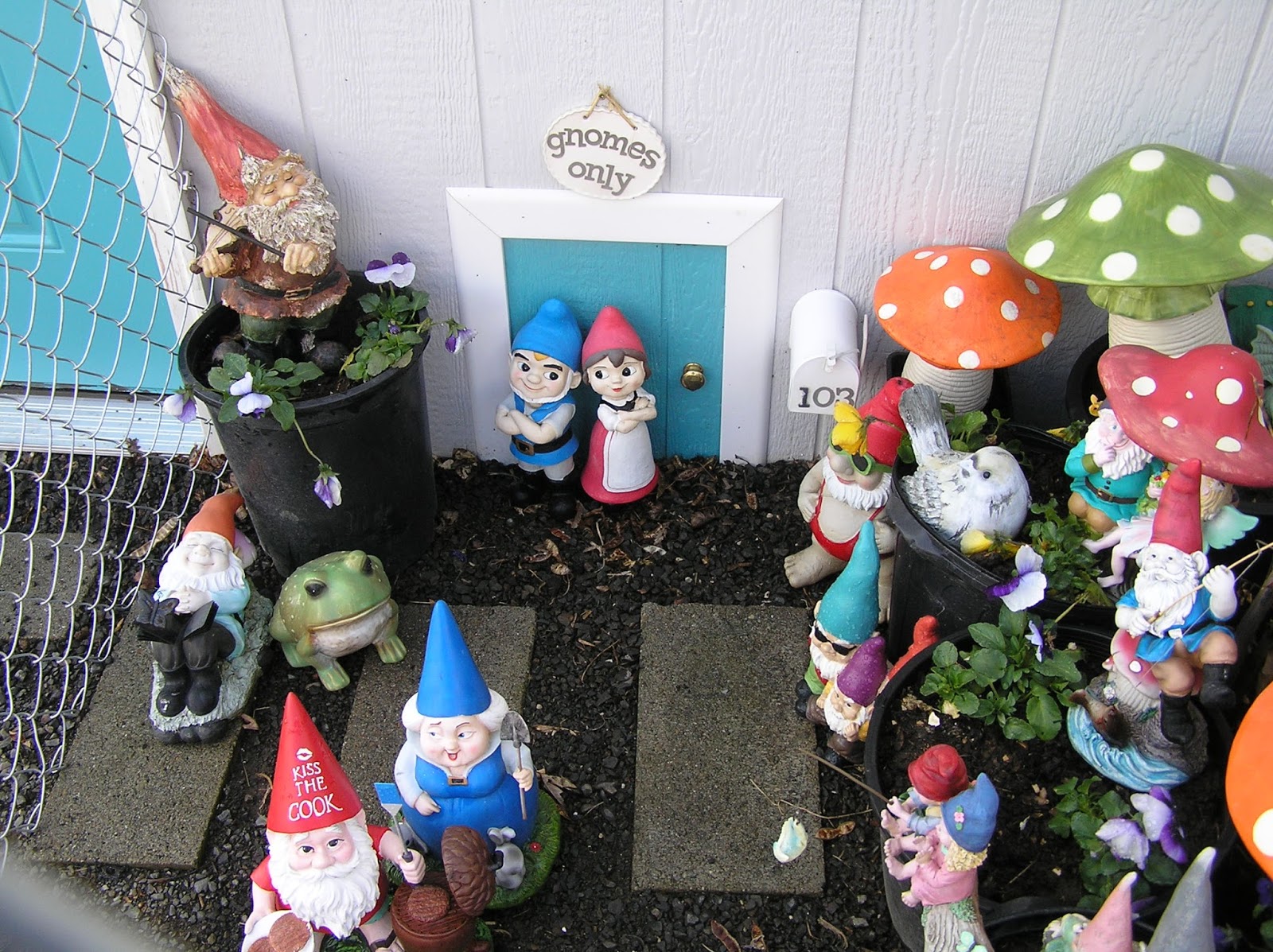
Admittedly, he WAS kind of cute. But he looked so lonely amidst the flowers all by himself. Being a bit of marshmallow heart, I decided to get him a friend. Just one, honest! And then I figured they probably needed some shelter from the sun and rain and so forth, so I got them a big ceramic mushroom. And before I knew it, there were more gnomes. And more mushrooms. And gnomes, gnomes, gnomes! The long and short is that I now have an entire gnomish civilization at the side of my house.

Part of the gnome colony at my house! (Photo by Dani Harper)
At first, I was certain that the grandkids would be delighted by the whimsical community of pointy-hatted citizens. Instead, they walked right by them. No guests have ever acknowledged their presence, no visiting neighbors have ever commented. Not once. And then suddenly I understood what was going on. Nobody can see them! My innocent-looking garden gnomes have cast a S-P-E-L-L. 

Why would I come to such a conclusion? Because historically gnomes have both magical powers AND the tendency to use them.

How else can I explain the large contingent of garden gnomes that crept into one of my faery novels? See STORM WARNED (Book 3 of the Grim Series). No doubt about it, I’m definitely under serious gnomish influence!

GNOMES IN MYTH AND LEGEND:

Gnomes form one of four groups of Elementals, according to the 16th century writings of Paracelsus. A gnome is an earth spirit and immortal, and there are many cultures around the world that have stories of similar mythical creatures such as the tomte of Sweden, the duende of Mexico, and the coblyn of Wales (coblyns appear in my Grim Series novels a lot!). The word gnome comes from the Greek genomos meaning "earth-dweller."

Said to be able to swim through soil and rock like a fish through water, gnomes come in several types such as Garden Gnomes, Farm Gnomes, Forest Gnomes, House Gnomes, and even Cave Gnomes. Gnomes range in size from a few inches tall to two or three feet in height. Some stories claim that gnomes are faster than they look, able to run about 35 mph!  There are also tales of gnomes being seven times stronger than a man.

Some of my favorite gnomes! (Photo by Dani Harper)
Like humans, not all gnomes are friendly or well-intentioned. Fortunately, the majority of them tend to be helpful and benevolent. They take an interest in the wellbeing of their surroundings --- for instance, ensuring that the garden is healthy, that plants and trees grow strong, that dwellings are clean and tools repaired, and that both wildlife and livestock are looked after. Some wineries in France have been rumored to take gnomes very seriously! Traditionally, the little guys look after the vineyard soil.

The magical powers of gnomes are similar to those of all faery tribes. They can protect or punish at will. A farmer who doesn’t take care of his animals could find himself the target of severe pranks! On the other hand, the aid of gnomes might be solicited by leaving food for them on the back porch or in the garden. Bread and milk is a popular choice for faeries, but gnomes have been rumored to favor beer and cheese...

Cave gnomes are said to be particularly sympathetic to miners (like the coblyns of Wales), and there are stories dating back to Roman times of gnomes knocking on the rocks of tin mines to warn the slaves of approaching dangers such as tunnel collapses. (Mind you, other stories tell of gnomes guarding the treasures of the earth and trying to lure miners away from them!)

HISTORY OF GARDEN GNOMES:

Image from Bigstock.com
Most of us are familiar with garden gnome figurines – after all, they date all the way back to Roman times! But the modern version became popular in Germany and other European countries in the early 1800s. The Griebel company in Gräfenroda, Germany, created its very first gnome in 1884. Not only does it still make and sell gnomes, it maintains a popular gnome museum!

Victorian England embraced the gnome in the 1840s after Sir Charles Isham brought 21 terra cotta gnomes from Germany to Lamport Hall, his home in Northamptonshire. One of those original gnomes still survives today! “Lampy”, as he is called, is on display in the Hall and is considered the oldest garden gnome in the world. He is valued at $2 million in US currency.

GNOME TRIVIA:

The Gnome Knows... is a wine label from vineyards in the Languedoc region in the south of France.

There is a Royal Gnome! According to an official list published by Buckingham Palace, Princess Anne of the Royal Family received a garden gnome as a gift in 2013.

Image from Bigstock.com
The German word for gnome is Gartenzwerg, which translates to garden dwarf. Currently there are approximately 25 MILLION gnomes in Germany alone, and many people take them indoors for the winter. It's traditional (and often considered lucky) to display the gnome in the home if possible, or at least give them a dry shelf in the garden shed.

Since the 1990s, gnome liberation groups have sprung up across several European countries and in some American states. One of the most famous of these is the Front de Libération des Nains de Jardin in France. Garden gnomes are “rescued” and released into the woods (claimed to be their natural habitat). Other groups work towards the ethical treatment of gnomes, claiming that being forced to stand in gardens is involuntary servitude. There are even gnome sanctuaries, such as the ones in Putford, England and Barga, Italy!

International Gnome Day is June 21st. The occasion began in 2002 and is now observed by more than a dozen countries. (Not to be confused with World Gnome Day which appears to be held in May!) There is also a Gnome Festival celebrated in August in Seabrook, Washington, and there's an annual Gnome March every April in Atlanta, Georgia. 

In fact, there's even a category in the Guinness Book of World Records for "Largest Gathering of People Dressed As Garden Gnomes. The current record is 478!   

Created using image from Bigstock.com
.....................................

Love Faeries? Check out The Grim Series by Dani Harper

STORM WARRIOR, STORM BOUND, and STORM WARNED
And watch for my upcoming release, STORM CROSSED!

Note: Every book in this series is designed to stand alone. It's more fun to read them in order, but not necessary.
Legend, love, lore, and magic...
See ALL my novels on my Amazon Author Page
or go to my website at http://www.daniharper.com

Tuesday, May 16, 2017

May is the Month for Faeries - Beware!

Posted by: Dani Harper, Author
Faery Queen
(Image source: Bigstock.com)
Ancient faery legends are brought to modern-day America in my ongoing Grim Series: Storm Warrior, Storm Bound, Storm Warned, and the upcoming release, Storm Crossed. 

The Fae in these novels are inspired by old stories I heard and read as a child. Between my Welsh gramma and ready access to a entire library of British books, I learned that faeries were not to be trifled with.

FORGET EVERYTHING YOU KNOW ABOUT TINKERBELL!

Faery beings come in all sizes and shapes from ethereally beautiful to monstrously frightening. But it’s their unpredictable temperament you have to watch out for – the Fae are easily offended, volatile, amoral, and even violent. 

While occasionally some may be helpful to humans, more often they delight in tormenting them. Their motives can range from child-like mischief (souring milk, knocking down fences, pulling hair) to downright evil (kidnapping, cursing, or even killing mortals). And of course, there's always a few that just like to eat people...

No wonder people have been trying to protect themselves from faeries for the last three thousand years or more!

PLANT PROTECTIONS

Marsh Marigolds
(Image source: Bigstock.com)
Historically, garlands were often made of marsh marigolds and hung over the barn doors to protect the horses from being ridden to exhaustion by fairies in the night. Flowers, especially primroses, were spread over windowsills and hung above the door-posts of the house for safety. Your best bet, however, was a plant called St. John's Wort. Wearing it was said to provide strong protection from fairy magic and mischief.

Fairies could vanish at will and remain invisible to mortal eyes for as long as they pleased. Carrying a four-leafed clover would allow you to see the fairies – but only once. A Celtic tradition was to sew several of the clovers into a tiny bag to be worn around the neck. You could then discern the fairies once for each clover in the bag. In some legends, the clover was said to allow you to see through fairy glamors and magical disguises.

Red berries were believed to keep fairies at bay, especially if they were from rowan trees, mountain ash or holly. So did red verbena (a flower). Daisies were often tucked into children’s pockets or woven into fanciful chains to wear around their necks to prevent them from being taken away by the faeries. And if you were walking through the woods, it was best to carry a walking stick or staff made of ash or rowan wood.

FOOD PROTECTIONS

An offering for the faeries
(Image source: Bigstock.com)
Traditionally, bread and salt provided protection from the Fae. Carrying yeast-risen bread with you had a two-fold effect. It would repel some faeries. Other faeries would accept it as an offering and leave you alone. My gramma taught me a Welsh tradition of leaving a saucer of milk and a slice of bread or some bread crusts on the back porch as an offering to the faeries, so they wouldn’t play pranks on the family or trouble the livestock. Sometimes, if you were seeking the faeries' aid, you might add berries, honey, or cheese.

Salt’s association with purity made it an excellent tool against otherworldly beings. Spreading salt across the threshold and along the windowsills has long been the primary method of keeping faeries, demons, and spirits out of houses.  If you had to carry food to the farmhands in the fields, sprinkling it with salt was said to keep the faeries from taking it – or from extracting the nourishment from it unseen!

Even humble oatmeal was believed to be a fairy repellent. You could carry a handful of dry oatmeal in your pocket or sprinkle it on your clothes. As long as you didn’t mind looking flaky, you’d be safe.

IRON PROTECTION

Iron in any form or shape has always been considered the very best protection against fairies – in almost all legends, the metal is like kryptonite to Superman. If you kept an iron nail in your pocket, you couldn’t be carried away by them. Sometimes iron nails were sewn into the hems of children’s clothing for that reason. A pair of iron shears hung on the wall near a baby’s bed was said to prevent the child from being swapped for an ugly fairy baby.

Iron horseshoes repel faeries
(Image source: Bigstock.com)
Horseshoes could be nailed over doorposts, a precaution that had to be taken to the extreme in my first two Grim books, Storm Warrior and Storm Bound. 

(By the way, some legends specify that the horseshoe should be placed on its side like the letter “C”, resembling the crescent moon, or it won’t repel the Fae!)


Steel is also effective against the faeries because it is created from processed iron. If a faery is cut by a steel or iron blade, the wound will not heal or will take a very long time. In some stories, the Fae is slowly poisoned by such a wound. Steel or iron weapons are among the few things that can actually kill a Fae being. 

However, unless it was plainly self-defense (and sometimes even that wouldn’t help your case), you could expect the rest of the faeries to exact a terrible retribution!

..............................................................

Love Faeries? Check out The Grim Series by Dani Harper

STORM WARRIOR, STORM BOUND, and STORM WARNED
And watch for my upcoming release, STORM CROSSED!

Note: Every book in this series is designed to stand alone. It's more fun to read them in order, but not necessary.
Legend, love, lore, and magic...
See ALL my novels on my Amazon Author Page
or go to my website at http://www.daniharper.com
Related Posts Plugin for WordPress, Blogger...